Restore. Recondition. Reuse.
IBC Tote Cleaning & Reconditioning
Our professional cleaning and reconditioning services extend the usable life of IBC totes by years. Whether you need a basic rinse for a tote switching between compatible products or a full FDA-compliant sanitization for food-grade reuse, we have the equipment, the expertise, and the processes to get it done right. A properly cleaned and reconditioned tote performs identically to a new one at a fraction of the cost.
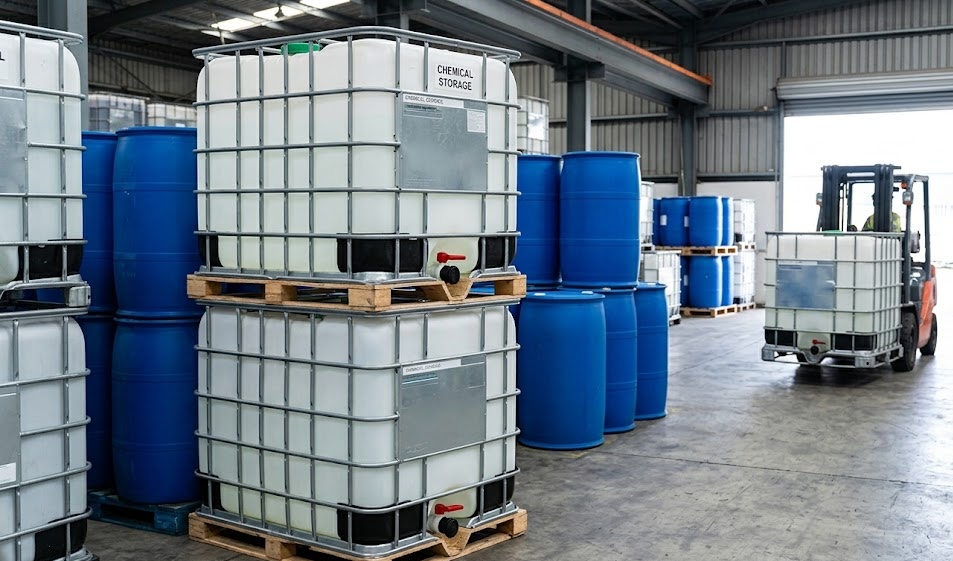
Cleaning Services
We offer multiple tiers of cleaning to match your application requirements and budget. Every cleaning process starts with a thorough assessment of the tote's previous contents to determine the appropriate method.
Triple Rinse Cleaning
The foundation of container cleaning and a regulatory requirement for many applications. The triple rinse process involves filling the tote to approximately 25% capacity with clean water (or appropriate solvent for chemical residues), agitating thoroughly, draining completely, and repeating three times. Each rinse cycle removes progressively more residual product from the bottle walls, valve assembly, and discharge area.
Best for: Totes switching between compatible products, non-critical storage applications, and meeting minimum EPA container rinsing requirements. This is the most cost-effective cleaning option.
High-Pressure Hot Water Wash
Our automated wash system uses water heated to 160-180°F delivered at 2,000+ PSI through rotating spray heads inserted directly into the tote opening. The combination of high temperature and high pressure strips stubborn residues, oils, adhesives, and label glue that a standard rinse cannot remove. The entire interior surface is reached by the rotating heads, including the bottom corners and areas around the discharge fitting where product tends to accumulate.
Best for: Totes previously used for oils, syrups, detergents, paints, and other viscous or sticky products. Removes the majority of staining and odor from HDPE bottles.
Steam Cleaning
Saturated steam at 250-280°F is introduced into the tote for an extended contact period. Steam cleaning achieves a level of sanitization that hot water alone cannot match. The extreme heat kills bacteria, mold, and other microorganisms embedded in the HDPE surface. It also volatilizes organic residues that are resistant to water-based cleaning. The steam cycle is followed by a clean-water rinse to flush condensate and loosened contaminants.
Best for: Totes being reconditioned for food-grade or pharmaceutical-adjacent applications. Essential for totes that previously held organic materials prone to microbial growth.
Chemical Sanitization
For applications requiring verified microbial elimination, we perform a chemical sanitization cycle using FDA-approved sanitizing agents. The tote is filled with a precisely measured sanitizing solution (typically peracetic acid or sodium hypochlorite at controlled concentrations), held for the required contact time, then thoroughly rinsed with potable water until all sanitizer residue is below detectable limits. Rinse water is tested to verify completeness.
Best for: Food and beverage industry applications where microbial contamination is a safety concern. Required for totes that will hold ingredients consumed by humans or animals.
FDA-Compliant Food-Grade Cleaning
Our most comprehensive cleaning protocol combines multiple stages into a single documented process: initial drain and pre-rinse, high-pressure hot water wash, steam sanitization, chemical sanitization with FDA-approved agents, final potable water rinse, and air drying in a clean environment. Every step is documented with time stamps, temperatures, chemical concentrations, and operator sign-off.
The result is a tote that meets FDA 21 CFR 177.1520 requirements for food-contact HDPE surfaces. We issue a Certificate of Cleaning that includes the full process record, suitable for presenting to food safety auditors and regulatory inspectors.
Best for: Food-grade reuse including beverage concentrate, edible oils, syrups, flavorings, and any product intended for human consumption. Required by most food manufacturers and co-packers.
Cleaning Methods Comparison
| Feature | Triple Rinse | Hot Water | Steam | Chemical | FDA Full |
|---|---|---|---|---|---|
| Temperature | Ambient | 160-180 F | 250-280 F | Ambient | Multi-stage |
| Pressure | Gravity fill | 2,000+ PSI | Atmospheric | Gravity fill | 2,000+ PSI |
| Microbial Kill | Minimal | Moderate | High | Complete | Complete |
| Stain Removal | Low | High | Moderate | Low | High |
| Odor Removal | Low | Moderate | High | Moderate | Complete |
| FDA Compliant | No | No | Partial | Yes | Yes (full) |
| Documentation | Basic | Standard | Standard | Detailed | Full certificate |
| Turnaround | 1-2 days | 2-3 days | 2-3 days | 3-4 days | 3-5 days |
| Relative Cost | $ | $$ | $$ | $$$ | $$$$ |
Reconditioning Services
Reconditioning goes beyond cleaning — it restores an IBC tote to like-new condition by replacing worn components and repairing structural issues.
Rebottling
The old HDPE bottle is removed and a brand-new virgin HDPE bottle installed. New valve assembly, sealed, and pressure-tested. Gets the full 5-year UV-stabilized lifespan at roughly 50% the cost of new.
Valve Replacement
The 2" butterfly valve is the most common failure point. We stock replacements from Schutz, Mauser, and Greif. Swap in minutes. Upgrades to ball valve or camlock adapter available on request.
Cage Repair & Straightening
Hydraulic straightening tools restore bent tubing. Cracked welds are re-welded. Severely damaged bars are cut out and replaced. After repair, re-galvanized or painted at repair points.
Pallet Replacement
Split, rotted, or compromised pallets replaced with new hardwood pallets to original specs. Composite (plastic) pallet upgrades available for longer pallet life.
Label Removal
Heat application, solvent-based adhesive dissolvers, and mechanical scraping leave the bottle surface clean for new labeling. Critical for food-grade and resale totes.
Pressure Testing
Hydrostatic test: filled with water, sealed, pressurized above rated working pressure, and held while a technician inspects every seam, valve, cap, and bottle-cage interface. Zero leaks required.
12-Point Quality Control Inspection
Every tote that goes through our cleaning or reconditioning passes this comprehensive checklist before release.
Bottle Integrity
Check for cracks, stress marks, UV degradation, and wall thickness
Interior Cleanliness
Visual inspection under light for residual staining or contamination
Odor Test
Trained inspector checks for residual odor indicating incomplete cleaning
Valve Operation
Full open/close cycle test, gasket seal verified, handle function confirmed
Cap Seal
Threaded cap engagement, gasket condition, and seal tested
Cage Structure
All bars straight, welds intact, no deformation affecting stacking
Cage-to-Bottle Fit
Bottle properly seated in cage, no gaps or movement
Pallet Condition
All boards solid, stringers intact, fork entry clear, no rot
Label Status
Old labels fully removed, surface clean for new labeling
Pressure Test
Hydrostatic test at rated pressure, held for set duration, zero leaks
Documentation
All process records complete with timestamps, temps, and operator ID
Final Grade & Tag
QC supervisor applies inspection sticker with date, grade, and cert number
Regulatory
FDA Compliance Deep-Dive
For food and beverage applications, our cleaning process is designed to meet the specific requirements of FDA 21 CFR 177.1520 for food-contact HDPE surfaces. Here is what that means in practice:
Material Verification
We verify the HDPE bottle is made from FDA-compliant resin before processing. Bottles from unknown sources or those that held industrial chemicals are not eligible for food-grade cleaning.
Process Validation
Our cleaning protocol is validated against FDA requirements with documented time, temperature, and chemical concentration parameters at each stage. Validation records are maintained and available for audit.
Sanitizer Compliance
We use only FDA-approved sanitizing agents at concentrations within the approved range. Peracetic acid and sodium hypochlorite are our primary sanitizers, both widely accepted for food-contact surfaces.
Rinse Water Testing
Final rinse water is tested to confirm sanitizer residue is below detectable limits. This testing is documented and included in the Certificate of Cleaning.
Clean Room Drying
After final rinse, totes are air-dried in a clean, controlled environment to prevent recontamination. Caps are loosely placed to allow airflow while preventing debris entry.
Traceability
Every food-grade cleaned tote is traceable back to its specific cleaning batch, operator, sanitizer lot, and test results. This traceability is required by food safety auditors (SQF, BRC, FSSC 22000).
Our Standards
Specialty Certifications Available
We work with certified Kosher and Halal inspectors to provide cleaning that meets religious dietary law requirements when needed.
Kosher & Halal Cleaning Certification
For food manufacturers producing Kosher or Halal products, container cleanliness extends beyond physical sanitation to include compliance with religious dietary laws. Our facility can accommodate supervised Kosher and Halal cleaning when required.
Kosher cleaning is performed under the supervision of a certified mashgiach who oversees the entire cleaning process to ensure it meets halachic requirements. This may include specific water temperatures, dedicated equipment, and documentation that the tote has been properly kashered.
Halal cleaning involves verification that no haram (forbidden) substances have come into contact with the tote during cleaning, that cleaning agents are halal-certified, and that the process is overseen by a qualified Halal certifier. We coordinate with recognized Halal certification bodies to provide proper documentation.
Turnaround Times
| Service | 1-20 Totes | 21-50 Totes | 51-100 Totes | 100+ Totes |
|---|---|---|---|---|
| Triple Rinse | 1-2 days | 2-3 days | 3-5 days | Custom schedule |
| Hot Water Wash | 2-3 days | 3-5 days | 5-7 days | Custom schedule |
| Steam Cleaning | 2-3 days | 3-5 days | 5-7 days | Custom schedule |
| Chemical Sanitization | 3-4 days | 4-6 days | 6-8 days | Custom schedule |
| FDA Food-Grade Full | 3-5 days | 5-7 days | 7-10 days | Custom schedule |
| Full Reconditioning | 5-7 days | 7-10 days | 10-14 days | Custom schedule |
Rush service available for an additional fee. Same-day triple rinse available for urgent orders of 10 or fewer totes.
Cost Comparison: Cleaning vs. Buying New
Buying new IBC totes every cycle is one of the biggest unnecessary expenses in bulk liquid handling. A new 275-gallon tote costs $200-$400. A full reconditioning with rebottling, new valve, cage repair, and food-grade cleaning typically costs a fraction of that — and gives you a tote with the same performance characteristics and expected lifespan as new.
Chemical Compatibility for Cleaning Agents
Not all cleaning agents are compatible with HDPE or the residual chemicals in used totes. Our team selects the appropriate cleaning chemistry based on these factors.
Potable Water
Safe for all applications. Primary rinse agent for food-grade and general cleaning. No chemical residue concerns.
Sodium Hypochlorite (Bleach)
Effective sanitizer at 200 ppm. FDA-approved for food-contact surfaces. Avoid prolonged contact with already degraded HDPE. Must be fully rinsed.
Peracetic Acid
Our preferred FDA sanitizer. Breaks down to acetic acid and water. No toxic residue. Effective at low concentrations. HDPE-compatible.
Caustic Soda (NaOH)
Excellent degreaser for oil and grease residues. HDPE resistant at moderate concentrations. Not for aluminum fittings. Requires thorough neutralization rinse.
Isopropyl Alcohol
Used for solvent-based residue removal. Short contact times only, as prolonged exposure can cause HDPE surface crazing. Not FDA-approved as final sanitizer.
Citric Acid
Natural descaler and mild sanitizer. GRAS (Generally Recognized As Safe) for food applications. Effective against mineral deposits and light scale. Environmentally benign.
Industry Case Studies
Food Industry
Organic Juice Manufacturer — Georgia
An organic cold-pressed juice company needed FDA-compliant IBC cleaning for totes used to store fruit concentrates. Their SQF auditor required documented cleaning protocols with full traceability. We implemented our FDA food-grade cleaning program for 40 totes per month, providing complete certificate packages that passed SQF audit on the first review. They save over $18,000 annually versus buying new totes each cycle, with zero quality incidents over 18 months.
Annual Savings
Quality Incidents
Pharmaceutical
Pharmaceutical Excipient Supplier — Virginia
A supplier of pharmaceutical-grade glycerin and propylene glycol needed clean totes that met pharma-adjacent standards. They could not use industrial-grade cleaning. We developed a custom cleaning protocol combining steam sanitization with chemical sanitization and documented rinse water testing that met their quality team's specifications. Full reconditioning of their returned totes now saves them $40,000+ annually compared to single-use new totes.
Annual Savings
Protocol Developed
Cleaning & Reconditioning FAQ
Can you clean a tote that previously held chemicals for food-grade reuse?
It depends on the specific chemical. Totes that held non-toxic, non-staining chemicals like soaps, detergents, or food-grade propylene glycol can often be cleaned to food-grade standards after our full FDA protocol. Totes that held industrial solvents, pesticides, or hazardous chemicals cannot be cleaned to food-grade regardless of the process. HDPE absorbs certain chemicals into its molecular structure, making complete removal impossible. We assess each tote individually and will tell you honestly if food-grade cleaning is achievable.
How do you determine which cleaning method my totes need?
We start by identifying the previous contents and your intended next use. If you are switching between compatible products (e.g., one food-grade oil to another), a triple rinse may suffice. If you need to remove all traces of a previous product for a different application, hot water wash or steam cleaning is needed. For food-grade applications, we always use our full FDA protocol. We never upsell you to a higher cleaning tier than your application requires, and we will recommend the most cost-effective option that meets your needs.
Do you clean totes on-site at our facility?
Our primary cleaning operations are at our Charlotte, NC facility where we have the full range of equipment and controlled environments needed for quality cleaning. However, for very large volumes (100+ totes), we can discuss mobile cleaning units that can perform basic triple rinse and hot water wash at your location. FDA food-grade cleaning always takes place at our facility due to the controlled environment and testing requirements. We can arrange pickup, cleaning, and return delivery as a turnkey service.
What is the difference between cleaning and reconditioning?
Cleaning focuses on the interior of the tote: removing residual product, sanitizing surfaces, and preparing the tote for its next use. Reconditioning goes further by addressing the physical condition of the tote itself: replacing the HDPE bottle (rebottling), swapping worn valves, straightening or repairing the steel cage, replacing the pallet, and pressure testing. A cleaned tote has the same bottle and cage but a clean interior. A reconditioned tote has new components that extend its service life by years.
Can you remove specific odors from HDPE bottles?
Most odors can be significantly reduced or eliminated through our steam cleaning process, which volatilizes the organic compounds causing the odor. Stubborn odors from products like fish oil, certain solvents, or aromatic chemicals may persist at low levels even after multiple cleaning cycles because HDPE absorbs these compounds into its polymer matrix. If complete odor elimination is critical for your application, reconditioning with a new bottle is the guaranteed solution. We will test and advise honestly on whether cleaning alone will meet your odor requirements.
How do you handle food allergen contamination in totes?
Food allergen management is taken seriously in our FDA cleaning process. Totes that previously held products containing major allergens (milk, soy, wheat, nuts, eggs, shellfish, etc.) are documented and tracked. Our multi-stage cleaning process with chemical sanitization and verified rinse testing removes allergen proteins to below detectable levels. However, for manufacturers with zero-tolerance allergen policies, we recommend reconditioned totes with new bottles to eliminate any possible residual allergen contact. We provide allergen-specific testing documentation upon request.
What certifications does your cleaning facility hold?
Our facility maintains FDA 21 CFR 177.1520 compliance for food-contact surface cleaning, EPA container management compliance, and ISO 9001-aligned quality management documentation. We do not hold organic or specific third-party food safety certifications (SQF, BRC) ourselves, but our processes and documentation are designed to support our customers in meeting those standards at their facilities. Our Certificate of Cleaning has been accepted by SQF, BRC, and FSSC 22000 auditors at customer facilities without exception.
What happens if a tote fails quality control after cleaning?
Totes that fail any point on our 12-point QC inspection are flagged immediately. Minor issues like a failed valve gasket are corrected and the tote is re-inspected. More significant failures, such as persistent odor that cleaning cannot resolve, are diverted to our reconditioning program for rebottling. If a tote has structural issues that make it unsuitable for reuse even after reconditioning, it goes to our recycling program. You are never charged for cleaning a tote that ultimately cannot be returned to service. We absorb that cost and apply it to recycling instead.
Before & After Reconditioning
Here is what a full reconditioning transforms, component by component, and the measurable improvements at each stage.
HDPE Bottle
Yellowed from UV exposure, stained from previous contents, surface scratches from cage friction, potential micro-cracks at stress points, residual odor embedded in polymer matrix, label adhesive and ghost marks
Brand-new virgin HDPE bottle with full UV stabilization, crystal-clear walls, zero contamination history, factory-fresh gasket surfaces, 5-year expected service life, FDA-compliant food-contact resin
Discharge Valve
Worn gasket causing slow drips, stiff handle operation from product buildup, potential chemical degradation of valve seat, mismatched or improvised replacement parts, thread wear on connection points
New OEM-specification butterfly or ball valve, fresh EPDM or Viton gasket, smooth full-travel operation, proper thread engagement, leak-tested at rated pressure, correct adapter for your application
Steel Cage
Bent bars from forklift impacts, surface rust from outdoor storage, cracked welds at high-stress joints, deformed top frame affecting stacking, missing or bent corner protectors, paint flaking
All bars hydraulically straightened to original geometry, cracked welds repaired and reinforced, rust treated and re-galvanized at repair points, top frame squared for proper stacking, full structural integrity restored
Pallet Base
Cracked deck boards from overloading, split stringers from forklift abuse, rot from ground moisture contact, missing fasteners, wobble affecting stability, fork entry partially blocked by damage
New hardwood boards replacing all damaged members, solid stringers with proper nail patterns, heat-treated per ISPM-15, level and stable platform, clear fork entries on all four sides, rated for full load capacity
Industries We Serve
Food & Beverage
Key needs: FDA food-grade cleaning, allergen management, SQF/BRC audit-ready documentation, Kosher/Halal options
Common totes: Corn syrup, juice concentrate, vegetable oil, flavoring totes
Pharmaceutical
Key needs: Pharma-adjacent sanitization, validated cleaning protocols, documented rinse water testing, full traceability
Common totes: Glycerin, propylene glycol, API intermediate, excipient totes
Chemical Manufacturing
Key needs: Chemical compatibility assessment, cross-contamination prevention, multi-stage decontamination
Common totes: Surfactant, solvent, acid, base, and specialty chemical totes
Agriculture
Key needs: Cost-effective cleaning for reuse, pesticide residue removal, basic sanitization for water and fertilizer storage
Common totes: Fertilizer, herbicide, pesticide, and irrigation water totes
Cosmetics & Personal Care
Key needs: Fragrance removal, high-standard sanitization, clean documentation for GMP environments
Common totes: Fragrance oil, surfactant, emollient, and preservative totes
Coatings & Adhesives
Key needs: Heavy residue removal, solvent cleaning for paint buildup, reconditioning for totes with thick interior coatings
Common totes: Paint, sealant, adhesive, and waterproofing compound totes
How to Prepare Totes for Cleaning
Proper preparation ensures faster turnaround and the best cleaning results. Follow these guidelines before sending totes to our facility.
Drain Completely
Remove all bulk product. Close valve after draining.
Cap Tightly
Thread the fill cap on to prevent contamination during transport.
Keep Labels On
Product labels help us identify contents and select the right cleaning protocol.
Note Special Requirements
Tell us your intended next use so we match the cleaning level to your application.
Group by Previous Contents
Separate food-grade totes from chemical totes for efficient processing.
Report Known Damage
Let us know about cracked bottles, broken valves, or bent cages so we can plan reconditioning.
Provide SDS for Chemicals
Safety Data Sheets help our team select compatible cleaning agents and proper PPE.
Schedule Delivery
Contact us to arrange drop-off at 5809 Long Creek Park Dr, Charlotte, NC 28269 or schedule a pickup.
Sustainability
Environmental Case for Cleaning Over Replacing
Every IBC tote you clean and reuse instead of replacing with a new one prevents approximately 75 lbs of virgin HDPE from being manufactured, saves 320 kWh of production energy, conserves 1,200 gallons of industrial water, and prevents 180 lbs of CO2 emissions. For a business cycling through 100 totes per year, choosing reconditioning over replacement means:
The Circular Economy in Action
When you clean and reuse totes, you are participating in the circular economy at its most practical level. Each cleaning cycle extends a tote's life by 2-5 years. A single steel cage can support 3-5 rebottling cycles, meaning one cage can last 15-25 years of active service. That is decades of use from a single manufacturing investment.
The Cleaning Process: What to Expect
Submit Your Request
Contact us with the number of totes, their previous contents, and your intended next use. We recommend the appropriate cleaning level and provide a detailed quote within 24 hours. If you are unsure what cleaning tier you need, our team will assess and advise based on your specific application requirements.
Deliver or Schedule Pickup
Bring totes to our facility at 5809 Long Creek Park Dr, Charlotte, NC 28269 or schedule a pickup. We accept totes with residual product inside; full draining is appreciated but not required. Our receiving team logs each tote, documents its incoming condition, and assigns it to the appropriate cleaning queue.
Pre-Clean Assessment
Each tote undergoes a detailed assessment before cleaning begins. We verify previous contents match what was reported, identify any structural issues that need repair, determine the exact cleaning protocol, and document the starting condition for quality control comparison after cleaning is complete.
Cleaning & Reconditioning
Your totes move through the specified cleaning process with full documentation at each stage. For reconditioning, component replacement and repair happen in parallel. Our team follows the exact protocol specified in your quote, with no shortcuts and no substitutions.
Quality Control & Certification
Every tote passes our 12-point inspection. Documentation is compiled including process records, test results, and inspection findings. For FDA cleaning, the Certificate of Cleaning includes complete traceability data. Failed totes are flagged for additional processing or diversion to recycling.
Return Delivery
Cleaned and reconditioned totes are staged for pickup or delivered back to your facility. All documentation accompanies the shipment. Totes are capped, valved, and ready for immediate use upon arrival. We coordinate delivery timing with your production schedule.
Why Choose IBC Totes Recycle for Cleaning
IBC-Only Focus
We specialize exclusively in IBC totes. Every piece of equipment, every protocol, and every team member is dedicated to IBC container services. This specialization means faster processing, deeper expertise, and higher quality outcomes than general industrial cleaning companies.
Full-Service Under One Roof
Cleaning, reconditioning, valve replacement, cage repair, pressure testing, and documentation all happen at our Charlotte facility. No subcontracting, no shipping totes between vendors. One point of contact, one invoice, one quality standard.
Proven Track Record
Our cleaning processes have been audited and approved by SQF, BRC, and FSSC 22000 auditors at customer facilities. We maintain less than 1% defect rate on reconditioned totes. Thousands of totes cleaned annually for food, pharma, chemical, and agricultural customers.
Get Your Totes Cleaned & Reconditioned
Send us details about your totes and the level of cleaning or reconditioning you need. We will quote it within 24 hours and schedule your batch.
Request Cleaning Quote