Sustainable IBC Solutions Since Day One
Give Every IBC Tote a Second Life
We buy, sell, recycle, clean, and transport used IBC totes across the USA. Every container we handle is one less in a landfill. Join the circular economy with America's most eco-conscious IBC solution provider.
See Our Operations
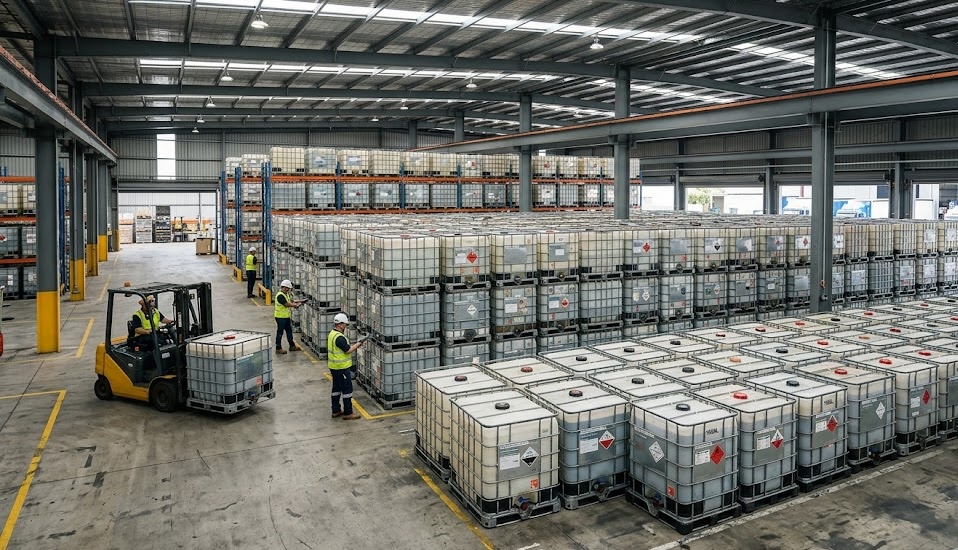
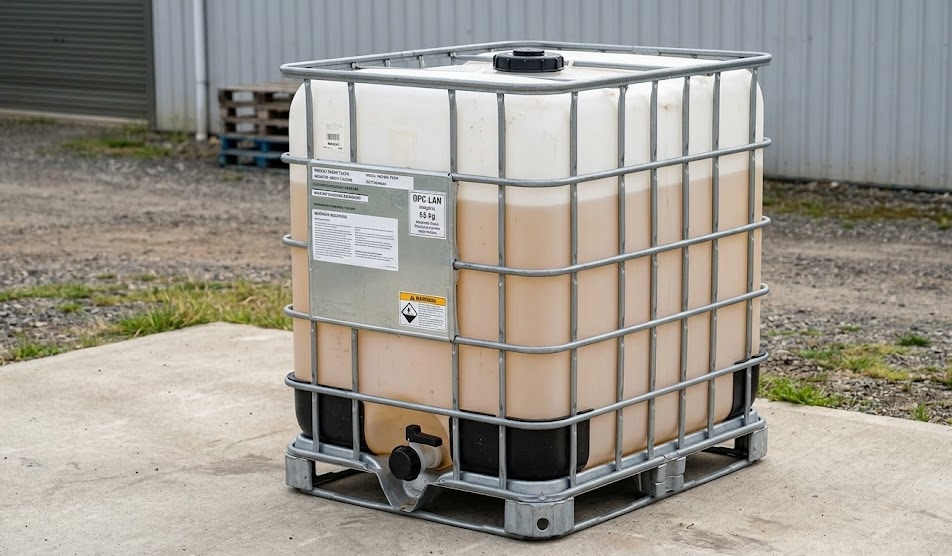
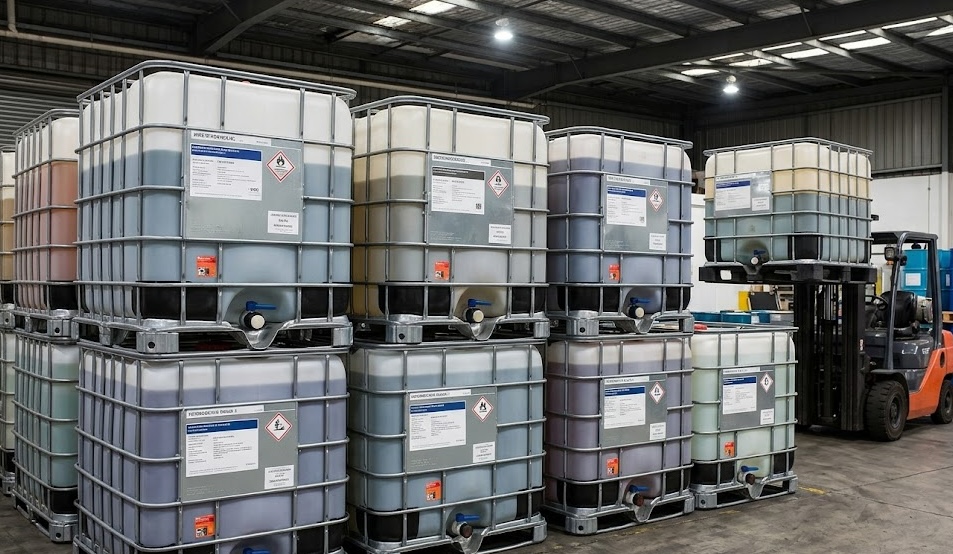
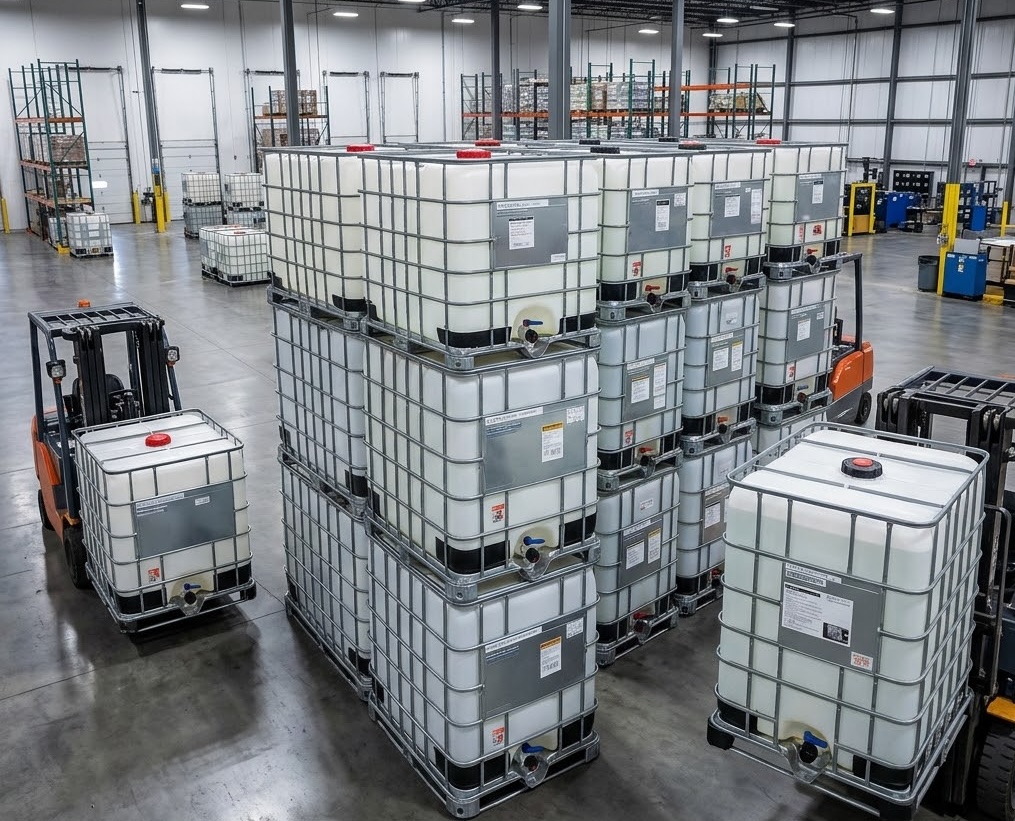
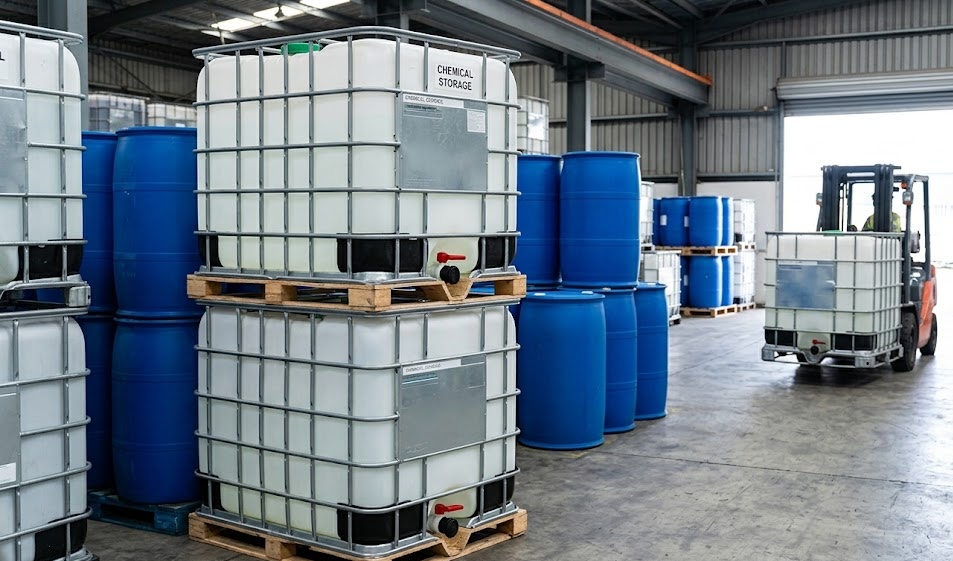
Inside Our IBC Tote Facility
The Smart Choice
Why Recycled IBC Totes?
Choosing recycled over new is not just an environmental decision — it is a strategic business advantage that impacts your bottom line, supply chain resilience, and corporate reputation.
40-70% Cost Savings
A new 275-gallon IBC tote costs between $300 and $500 depending on specifications. Reconditioned totes of equivalent quality run $90 to $180. For businesses ordering in bulk, that difference compounds into tens of thousands of dollars annually without sacrificing container integrity or performance.
Reduced Carbon Footprint
Manufacturing a single new IBC tote generates approximately 180 kg of CO2 from raw material extraction, HDPE blow molding, steel cage fabrication, and assembly. Reconditioning an existing tote produces just 12-15 kg of CO2 — a reduction of over 90% per unit. At scale, this translates to measurable ESG improvements.
Faster Availability
New IBC totes have lead times of 6 to 12 weeks when ordered from manufacturers, and global resin shortages can push that further. Our reconditioned inventory ships within 48 hours for most orders. We maintain rolling stock of over 5,000 units across multiple grades, so you never face production delays waiting on containers.
Same Structural Integrity
HDPE (high-density polyethylene) maintains its structural properties through multiple use cycles. The galvanized steel cage frame is engineered for a 10+ year lifespan. Our inspection process verifies wall thickness, valve function, cage alignment, and UN certification markings. A properly reconditioned tote performs identically to new.
Regulatory Compliance
Our reconditioned totes meet UN 31HA1/Y performance standards for hazardous and non-hazardous liquid transport. Food-grade units undergo FDA-compliant triple-rinse protocols. We provide certificates of compliance and cleaning verification documentation so your supply chain auditors have everything they need.
ESG Reporting Value
Publicly traded companies and large enterprises increasingly require documented environmental metrics. Every recycled tote purchase comes with quantified impact data — CO2 avoided, water conserved, plastic diverted — that plugs directly into Scope 3 emissions reporting and sustainability disclosures for stakeholders.
Extended Product Life
A well-maintained IBC tote can complete 5 to 8 full use cycles before the HDPE bottle requires replacement. The steel cage and pallet base often last 15+ years. By reconditioning rather than discarding after a single use, you extract maximum value from the embodied energy and materials already invested in each container.
Waste Stream Revenue
If your facility generates spent IBC totes, they represent a recoverable asset rather than a disposal cost. We purchase used totes in any condition. Instead of paying $40-80 per unit for waste hauling, you receive $15-60 per tote depending on condition. That turns a cost center into a modest revenue stream while reducing your waste footprint.
From Pickup to Delivery
Our Process in Detail
Every IBC tote that enters our facility undergoes a rigorous six-stage process before it reaches your dock. No shortcuts, no compromises.
Collection & Intake
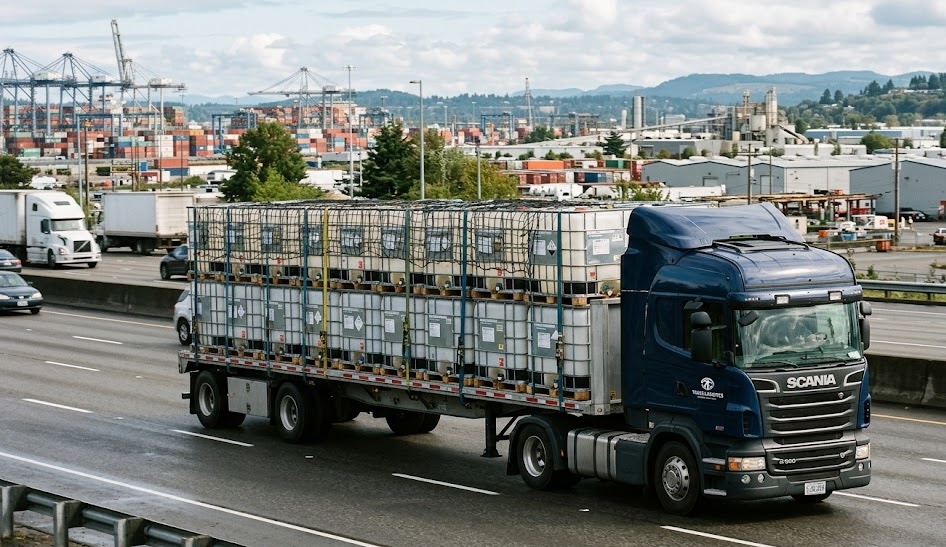
Our logistics team coordinates pickup from manufacturing plants, food processors, chemical facilities, and agricultural operations nationwide. We handle everything from single-unit pickups to full truckloads of 56+ totes. Each container is tagged with a unique tracking number at intake, recording its origin, previous contents (when known), and physical condition upon arrival at our Charlotte facility.
Inspection & Assessment
Trained inspectors evaluate each tote across 22 quality checkpoints. We measure HDPE wall thickness with ultrasonic gauges, check the steel cage for weld integrity and corrosion, test valve operation and thread condition, verify pallet structural soundness, and confirm UN/DOT certification markings are legible. Totes are sorted into reuse, rebottle, recycle, or parts-harvest categories based on results.
Cleaning & Decontamination
Totes enter our automated wash bay for high-pressure cleaning at 180°F using biodegradable, EPA-approved detergents. Food-grade units undergo a triple-rinse cycle followed by sanitization with a peracetic acid solution. Chemical residues are tested using pH strips and, when required, laboratory analysis. Wash water is captured, treated in our on-site filtration system, and recycled — we discharge zero contaminated water.
Reconditioning & Repair
Damaged valves are replaced with new 2-inch NPS butterfly or ball valves. Bent cage tubes are straightened or re-welded. Cracked fill caps get swapped for new vented or non-vented models. Worn gaskets are replaced with fresh Buna-N or EPDM seals. For rebottled totes, the old HDPE inner bottle is removed entirely and replaced with a factory-new blow-molded bottle, giving you new-container performance inside a proven steel cage.
Quality Grading & Certification
Each finished tote is pressure-tested at 1.5x rated capacity and assigned a grade: Grade A (like-new, single previous use, cosmetically clean), Grade B (fully functional, minor cosmetic wear, multiple previous uses), or Grade C (functional for non-critical applications, visible wear). Food-grade totes receive additional certification with batch-tracked cleaning records. Every unit ships with a condition report.
Redistribution & Delivery
Finished totes are stored in our covered, climate-monitored warehouse organized by grade, size, and type. Orders are palletized and secured for flatbed, dry van, or LTL shipment depending on quantity. Most orders ship within 48 hours. We coordinate delivery scheduling, provide tracking numbers, and offer liftgate service for locations without dock access. Bulk orders of 100+ units qualify for dedicated freight pricing.
Complete Inventory Guide
IBC Tote Types Explained
Not all IBC totes are created equal. Understanding the differences helps you choose the right container for your application, budget, and compliance requirements.
Standard 275 Gallon
48" x 40" x 46" | ~160 lbs empty | HDPE bottle, steel cage, composite or steel pallet
The most common IBC size in North America. Fits standard US pallet dimensions (48x40). Ideal for chemicals, soaps, detergents, lubricants, agricultural liquids, and water storage. Compatible with most filling and dispensing equipment.
Standard 330 Gallon
48" x 48" x 46" | ~175 lbs empty | HDPE bottle, steel cage, composite or steel pallet
European-standard footprint (1200x1200mm). Holds 20% more volume than the 275-gallon model. Common in international supply chains, beverage production, and pharmaceutical applications. Requires a 48x48 pallet space on racking.
Food-Grade IBC Totes
275 or 330 gal | FDA-compliant HDPE | Triple-rinsed and sanitized | Certified cleaning records
Required for beverages, edible oils, syrups, honey, wine, juice concentrates, vinegar, and food-grade chemicals. Must be traceable to previous contents. Our food-grade totes come with batch cleaning certificates and are stored in dedicated clean areas.
Reconditioned IBC Totes
Original bottle cleaned and restored | New valve, cap, and gasket | Pressure tested | Graded A, B, or C
The best value option for non-food applications. Professionally cleaned, fitted with new discharge hardware, and verified for structural integrity. Perfect for industrial chemicals, water treatment, agriculture, and general liquid storage. 85% of our sales volume.
Rebottled IBC Totes
Brand-new HDPE bottle in existing steel cage | New valve assembly | UN certified | Full pressure test
When you need the cleanliness of a new container without the full new-tote price. The old HDPE bottle is removed and replaced with a factory-fresh blow-molded bottle. Ideal for applications where previous-content contamination risk is unacceptable but a completely new cage frame is unnecessary.
Stainless Steel IBC Totes
304 or 316L stainless | 350-550 gal capacities | Tri-clamp fittings | CIP capable
Built for demanding pharmaceutical, biotech, high-purity chemical, and premium food/beverage applications. Stainless IBCs are fully CIP (clean-in-place) capable, resist corrosion from aggressive solvents and acids, and last virtually indefinitely with proper maintenance. They command premium prices but offer extreme longevity.
Composite IBC Totes
HDPE bottle within a rigid composite frame | Lightweight | Stackable 2-high when full
A lighter alternative to steel-cage IBCs. The composite outer frame (typically fiberglass-reinforced polypropylene) reduces tare weight by 15-20%, which matters for weight-sensitive shipments. Common in coating, adhesive, and ink industries where the slightly lower stacking strength is acceptable.
Measurable Results
Environmental Impact Dashboard
These numbers represent the cumulative environmental benefit of our operations. Every tote we recycle, recondition, and redistribute contributes to these totals.
Equivalent to filling 3.6 Olympic swimming pools
Equal to taking 2,000 cars off the road for a year
Kept out of landfills where HDPE takes 500+ years to decompose
Enough to power 1,700 average US homes for a year
Based on carbon sequestration equivalency calculations
Annual energy savings converted to household electricity
Annual CO2 reduction matched to vehicle emissions
Total water conserved through our closed-loop wash system
The Full IBC Tote Lifecycle, Handled
From sourcing to recycling, we manage every step of the IBC tote journey to maximize value and minimize environmental impact.
Buy IBC Totes
Quality-inspected used and reconditioned IBC totes at competitive prices. Every grade, every size, ready to ship nationwide.
Sell Your Totes
Turn surplus IBC containers into cash. We buy used totes in any condition from businesses across the country.
Recycling
Responsible recycling of IBC totes that can't be reused. We break them down into raw materials for new products.
Cleaning & Reconditioning
Professional cleaning, pressure washing, and reconditioning to extend tote life and meet industry standards.
Transportation
Nationwide pickup and delivery of IBC totes. Efficient logistics reduce emissions and save you money.
Accessories & Parts
Valves, caps, adapters, gaskets, liners, and heating blankets. Everything you need to keep your IBC totes working.
Trusted by Industry Leaders
What Our Customers Say
From small farms to Fortune 500 manufacturers, businesses trust us to deliver quality recycled IBC totes on time, every time.
“We switched from buying new IBCs to reconditioned totes from IBC Totes Recycle two years ago. The quality is indistinguishable from new, and we have cut our container procurement budget by 55%. Our sustainability officer loves the impact documentation they provide with every order.”
Regional Chemical Distributor
Southeast US · 200+ totes/year
“The food-grade totes arrived cleaner than some new ones we have purchased from major suppliers. Every unit had a cleaning certificate and the previous contents were fully documented. For a craft beverage operation like ours, that traceability is non-negotiable.”
Craft Beverage Manufacturer
Mid-Atlantic · Food-grade totes
“We generate about 40 spent IBCs per month from our production line. Before finding IBC Totes Recycle, we were paying a hauler to take them away. Now they pay us for the empties and handle all the pickup logistics. It turned a disposal cost into revenue.”
Industrial Coatings Manufacturer
Midwest US · Sells 500+ totes/year
“We needed 120 totes for a large-scale irrigation project on a tight timeline. IBC Totes Recycle had them staged and loaded within 36 hours. The Grade B totes they recommended were perfect for water storage at a fraction of what new units would have cost us.”
Agricultural Operation
North Carolina · Bulk water storage
“As a pharmaceutical contract manufacturer, our compliance requirements are stringent. IBC Totes Recycle provided rebottled totes with full documentation — new UN certification, cleaning validation records, and material traceability. Their process is genuinely pharmaceutical-grade.”
Pharmaceutical CDMO
East Coast · Rebottled totes
“We use IBC totes for rainwater harvesting and aquaponics systems. The team helped us select the right food-safe containers and even custom-fit ball valves for our gravity-feed setup. They understand the technical side, not just the sales side.”
Urban Farm & Sustainability Project
Charlotte, NC · Repurposed totes
Our Commitment
Every Tote Reused is a Win for the Planet
A single IBC tote takes over 500 years to decompose in a landfill. By recycling and reusing these containers, we're dramatically reducing plastic waste, conserving the energy and water needed to manufacture new ones, and keeping harmful chemicals out of our soil and waterways.
- ✓Each reused tote saves ~75 lbs of plastic from landfills
- ✓Reconditioning uses 85% less energy than new production
- ✓Our closed-loop process achieves near-zero waste
- ✓FDA-compliant cleaning for food-grade reuse
IBC Tote Types We Carry
From standard 275-gallon containers to specialty food-grade totes, we stock every type of IBC you need.
Standard IBC Totes
275 & 330 gallon capacity. HDPE bottle with galvanized steel cage. The workhorse of bulk liquid storage.
Learn more →Food-Grade IBC Totes
FDA-compliant, thoroughly cleaned and sanitized. Safe for beverages, oils, syrups, and food ingredients.
Learn more →Reconditioned Totes
Professionally cleaned, inspected, and restored to like-new condition. Same performance at a fraction of the cost.
Learn more →IBC Accessories
Valves, adapters, caps, gaskets, liners, heating blankets, and covers. Keep your totes in top condition.
Learn more →Repurposed Products
Rain barrels, planters, compost bins, and custom projects made from recycled IBC totes. Creative sustainability.
Learn more →Cage-Only / Bottle-Only
Need just the steel cage or HDPE bottle? We sell components separately for replacements and custom builds.
Learn more →Expert Answers
Comprehensive FAQ
Everything you need to know about buying, selling, and recycling IBC totes. Click any question to expand.
What is the difference between a reconditioned and a rebottled IBC tote?
A reconditionedIBC tote retains its original HDPE inner bottle. The bottle is professionally cleaned (high-pressure wash at 180°F), residual contents are removed, and worn components like valves, gaskets, and caps are replaced with new parts. The cage and pallet are inspected and repaired as needed. This is the most cost-effective option and suitable for the vast majority of industrial applications.
A rebottledIBC tote has its original HDPE bottle completely removed and replaced with a brand-new, factory blow-molded bottle. The existing steel cage and pallet are retained. This gives you a “like-new” interior with zero contamination risk from previous contents, at roughly 60-70% of the cost of a completely new tote. Rebottled totes receive fresh UN certification markings.
Can recycled IBC totes be used for food-grade applications?
Yes, but only when properly processed and documented. For a used tote to qualify as food-grade, we must verify the previous contents were also food-grade (no chemical cross-contamination), perform a triple-rinse cleaning cycle with FDA-approved sanitizing agents, and conduct residue testing to confirm no contamination remains. Each food-grade tote ships with a certificate of cleaning that identifies the unit, previous contents, cleaning date, sanitizer used, and test results. We never sell a tote as food-grade unless we can fully document its chain of custody.
How many times can an IBC tote be reused before it needs to be recycled?
The HDPE inner bottle of a standard IBC tote can typically withstand 5 to 8 full use-and-reconditioning cycles before the polyethylene degrades enough to warrant replacement. The critical factors are UV exposure (which accelerates HDPE embrittlement), the aggressiveness of stored chemicals, storage temperature extremes, and mechanical stress from stacking and transport. The galvanized steel cage typically lasts 10-15 years or more, and the pallet base (steel or composite) has a similar lifespan. When the bottle reaches end-of-life, we can rebottle the tote (new bottle, same cage) or recycle the HDPE as post-consumer resin.
What is the minimum order quantity, and do you offer bulk pricing?
There is no minimum order quantity — we sell individual totes to homeowners, hobbyists, and small operations. However, our pricing structure rewards volume. Orders of 10+ units receive tiered discounts, and full truckload orders (56 totes on a standard flatbed) get our best per-unit pricing plus optimized freight rates. For recurring needs, we offer standing purchase agreements with locked-in pricing for 6 or 12 months. Contact us with your estimated annual volume and we will build a custom quote.
Do you pick up used IBC totes, and what condition do they need to be in?
We purchase and pick up used IBC totes in virtually any condition. Clean, single-use totes with known previous contents command the highest buyback prices. Totes with residual chemicals, damaged valves, dented cages, or cracked bottles still have value — we can recondition salvageable units and recycle the rest for raw materials. The only totes we cannot accept are those contaminated with hazardous waste classified under EPA regulations (RCRA hazardous waste). For pickup, we coordinate free collection for loads of 20+ totes in most regions, and offer competitive pickup rates for smaller quantities.
What does “UN certified” mean for an IBC tote, and does it matter?
UN (United Nations) certification means the tote has been manufactured and tested to meet international standards for transporting dangerous goods. The marking (e.g., UN 31HA1/Y) indicates the container type, construction material, performance level, and test results. If you are shipping hazardous materials via public roads, rail, or sea, you are legally required to use UN-certified containers. For non-hazardous storage on your own property, UN certification is not strictly required, but it provides assurance of structural integrity. Reconditioned totes retain their original UN markings; rebottled totes receive fresh certification.
How should I store IBC totes to maximize their lifespan?
The number-one enemy of HDPE is ultraviolet light. Store totes indoors or under cover whenever possible. If outdoor storage is unavoidable, use UV-protective tote covers or blankets. Stack no more than two filled totes high (the cage is rated for 2-high stacking when loaded, or 4-high when empty). Keep totes on level ground away from sharp objects that could puncture the bottle. If storing water or aqueous solutions long-term in warm climates, consider algae-prevention additives and opaque covers. Drain and clean totes between uses, especially when switching between different liquid types.
What valve types are available, and which should I choose?
Standard IBC totes come with a 2-inch (DN50) NPS or NPT threaded discharge valve at the base. The most common types are butterfly valves (default on most totes, good for general-purpose flow control), ball valves (better for precise on/off control and gravity-feed applications), and camlock fittings (for quick-connect hose attachment). For food and beverage applications, we recommend polypropylene ball valves with EPDM seals. For chemicals, Buna-N sealed valves offer better chemical resistance. We can fit any valve type at the time of reconditioning.
Do you ship nationwide, and what are the typical freight costs?
Yes, we ship to all 50 states. Freight costs depend on quantity, distance from our Charlotte, NC facility, and delivery requirements. A single tote shipped via LTL freight typically costs $80-$200 depending on destination. A full truckload of 56 totes shipped regionally (Southeast) runs $800-$1,500, while cross-country loads range from $2,500-$4,500. We provide exact freight quotes with every order proposal. For customers within a 150-mile radius of Charlotte, we offer direct delivery on our own trucks, often at lower rates than common carriers. Liftgate service is available for an additional fee.
What happens to IBC totes that cannot be reused or reconditioned?
Nothing goes to waste. Totes that fail our reconditioning criteria are disassembled into their component materials. The HDPE bottle is shredded, washed, and pelletized into post-consumer HDPE resin that feeds back into manufacturing for drainage pipe, lumber alternatives, automotive parts, and other durable goods. The steel cage is sent to metal recyclers for smelting into new steel products. Composite pallets are granulated for use in pallet re-manufacturing. Even the small parts — gaskets, valve components, labels — are sorted and recycled where possible. Our current diversion rate from landfill is 97.3%.
How It Works
Simple, transparent process from start to finish.
Request Quote
Fill out our form with your needs. We respond within 24 hours.
Get Matched
We find the right totes at the right price for your specific use case.
We Deliver
Nationwide shipping or local pickup. Flexible scheduling.
Go Green
Every reused tote reduces waste. Track your eco-impact with us.
Serving Every Sector
Industries We Serve
IBC totes are the backbone of bulk liquid handling across dozens of industries. We supply reconditioned containers tailored to the specific requirements of each sector.
Agriculture & Farming
Fertilizers, pesticides, herbicides, liquid feed supplements, and irrigation water storage. Bulk liquid handling is essential in modern farming operations.
Food & Beverage
Juice concentrates, edible oils, syrups, wine, vinegar, and food-grade solvents. FDA-compliant totes with full cleaning documentation and traceability.
Chemical Manufacturing
Industrial solvents, acids, bases, surfactants, and specialty chemicals. UN-certified containers rated for hazardous material transport and storage.
Pharmaceuticals
API intermediates, excipient solutions, purified water, and cleaning agents. Rebottled totes with validated cleaning records for GMP-compliant facilities.
Water Treatment
Sodium hypochlorite, polymer flocculants, pH adjustment chemicals, and treated water. Municipal and private water treatment plants rely on IBCs daily.
Construction
Concrete admixtures, curing compounds, dust suppressants, and jobsite water supply. Durable totes that handle rough construction site conditions.
Automotive & Lubricants
Motor oils, transmission fluids, coolants, brake fluid, and parts cleaning solvents. High-volume automotive suppliers depend on efficient bulk logistics.
Cosmetics & Personal Care
Lotions, shampoo bases, fragrance oils, glycerin, and surfactant blends. Clean, food-grade or cosmetic-grade totes for sensitive formulations.
Paint & Coatings
Latex paints, industrial coatings, stains, sealants, and thinners. Chemical-resistant totes suited for solvent-based and water-based products alike.
Cleaning Products
Detergents, disinfectants, degreasers, and sanitizers. High-turnover industry where cost-effective reconditioned totes provide significant savings.
Oil & Gas
Drilling fluids, production chemicals, glycol, and methanol. Rugged totes built to withstand field conditions and hazardous material compliance requirements.
Renewable Energy
Biodiesel feedstock, bioethanol, solar panel cleaning solutions, and battery electrolytes. Growing demand from the clean energy sector for sustainable packaging.
Our Pledge
Sustainability Commitment
Recycling IBC totes is not just what we do — it is who we are. Here is how recycled containers compare to new ones, and where we stand on our recovery goals.
| Metric | New IBC Tote | Recycled IBC Tote | Savings |
|---|---|---|---|
| CO2 Emissions | ~180 kg | ~15 kg | 92% |
| Water Consumption | ~520 gal | ~45 gal | 91% |
| Energy Usage | ~370 kWh | ~55 kWh | 85% |
| Raw Plastic Required | ~75 lbs | 0 lbs | 100% |
| Steel Required | ~65 lbs | ~2 lbs (repairs) | 97% |
| Landfill Impact | End-of-life disposal | Diverted & reused | 97.3% diversion |
| Lead Time | 6-12 weeks | 48 hours | 95% faster |
| Cost to Buyer | $300-$500 | $90-$250 | 40-70% |
Zero Landfill Pledge
We are committed to diverting 100% of incoming IBC totes from landfills by 2027. Every component — HDPE, steel, composite, rubber, even labels — is either reused or recycled into raw materials. Our current diversion rate stands at 97.3%.
Carbon Neutral Operations
Our facility runs on 60% renewable energy, and we are transitioning our delivery fleet to compressed natural gas and electric vehicles. By 2028, we aim for fully carbon-neutral operations from intake through final delivery.
Closed-Loop Water System
Our wash bay operates a fully closed-loop water treatment system. Wash water is filtered, treated, and recirculated. We currently recycle 94% of process water and discharge zero contaminated water into municipal systems or waterways.
Recovery & Diversion Rates
Learn More
Resources & Guides
Dive deeper into IBC tote knowledge with our comprehensive guides, specifications, and industry resources.
IBC Tote Buying Guide
Everything you need to know before purchasing used or reconditioned IBC totes. Covers grading systems, what to look for during inspection, how to match tote specs to your application, and cost-saving strategies for bulk procurement.
Read guide →IBC Tote Specifications
Detailed technical specifications for every IBC tote type we carry. Dimensions, weights, material grades, UN certification codes, valve threading standards, fill cap sizes, and stacking ratings — all in one reference.
Read guide →Eco Impact Calculator
Enter the number of totes you plan to buy or recycle and see the exact environmental impact: CO2 avoided, water saved, plastic diverted, and energy conserved. Generate a shareable impact report for your sustainability team.
Read guide →IBC Cleaning & Maintenance
Best practices for extending the life of your IBC totes. Covers proper cleaning techniques, compatible cleaning agents by material type, storage guidelines, UV protection, gasket replacement intervals, and valve maintenance schedules.
Read guide →Industry Compliance Guide
Navigate the regulatory landscape for IBC tote use across industries. UN/DOT transport regulations, FDA food-contact requirements, OSHA storage guidelines, EPA waste handling rules, and state-specific requirements explained.
Read guide →Sustainability Reporting Data
Access quantified environmental data for your corporate sustainability reports. We provide per-tote impact metrics, annual aggregated data, and formatted inserts compatible with GRI, SASB, and CDP reporting frameworks.
Read guide →Coast to Coast
Nationwide Coverage
Headquartered at 5809 Long Creek Park Dr, Charlotte, NC 28269, we serve all 50 states with competitive freight rates. Our regional focus areas offer the fastest turnaround and lowest shipping costs.
Southeast (Home Region)
North Carolina, South Carolina, Virginia, Georgia, Tennessee, Florida, Alabama, and Mississippi. Direct delivery from our own fleet within 1-2 business days. Free pickup for 20+ totes. Best freight rates in the network.
1-2 day delivery · Lowest freightNortheast & Mid-Atlantic
New York, New Jersey, Pennsylvania, Maryland, Delaware, Connecticut, Massachusetts, and New England. LTL and full truckload service with 2-3 day transit times. High-density industrial corridor with strong demand for reconditioned totes.
2-3 day delivery · LTL availableMidwest & Great Lakes
Ohio, Indiana, Illinois, Michigan, Wisconsin, Minnesota, Iowa, and Missouri. Major manufacturing and agricultural hub. Full truckload orders ship 3-4 days. Partnership carriers provide competitive intermodal rates for large volumes.
3-4 day delivery · Intermodal optionsSouth Central & Gulf Coast
Texas, Louisiana, Arkansas, Oklahoma, and the Gulf region. Major petrochemical and agriculture corridor. We maintain strong carrier relationships for both inbound tote sourcing and outbound deliveries across this high-volume market.
3-4 day delivery · Oil & gas specialistsMountain West & Plains
Colorado, Montana, Wyoming, Utah, Kansas, Nebraska, and the Dakotas. Agricultural and energy sector demand. Full truckload shipping is most cost-effective for this region given distances. We coordinate consolidation for smaller orders.
4-5 day delivery · FTL recommendedPacific West & Northwest
California, Oregon, Washington, Nevada, Arizona, and Hawaii. West Coast agriculture, wine, tech manufacturing, and water management sectors. 5-7 day transit for ground freight. We offer rail intermodal for bulk orders to keep costs competitive.
5-7 day delivery · Rail intermodal availableCalculate Your Eco Impact
See exactly how much water, energy, and landfill space you'll save by choosing recycled IBC totes. Try our interactive calculator.
Try Eco CalculatorWhy Businesses Choose IBC Totes Recycle
Cost Savings
Used and reconditioned totes cost 40-70% less than new ones.
Reliability
Every tote is pressure-tested and quality-inspected before sale.
Fast Turnaround
Large inventory means we ship within 48 hours, most orders.
Eco Certified
Documented sustainability metrics for your ESG reporting needs.
Join 500+ Businesses Going Green with Recycled IBC Totes
Whether you need to buy, sell, or recycle — we're your one-stop IBC tote solution.
Request a Free Quote